Spotify Podcast
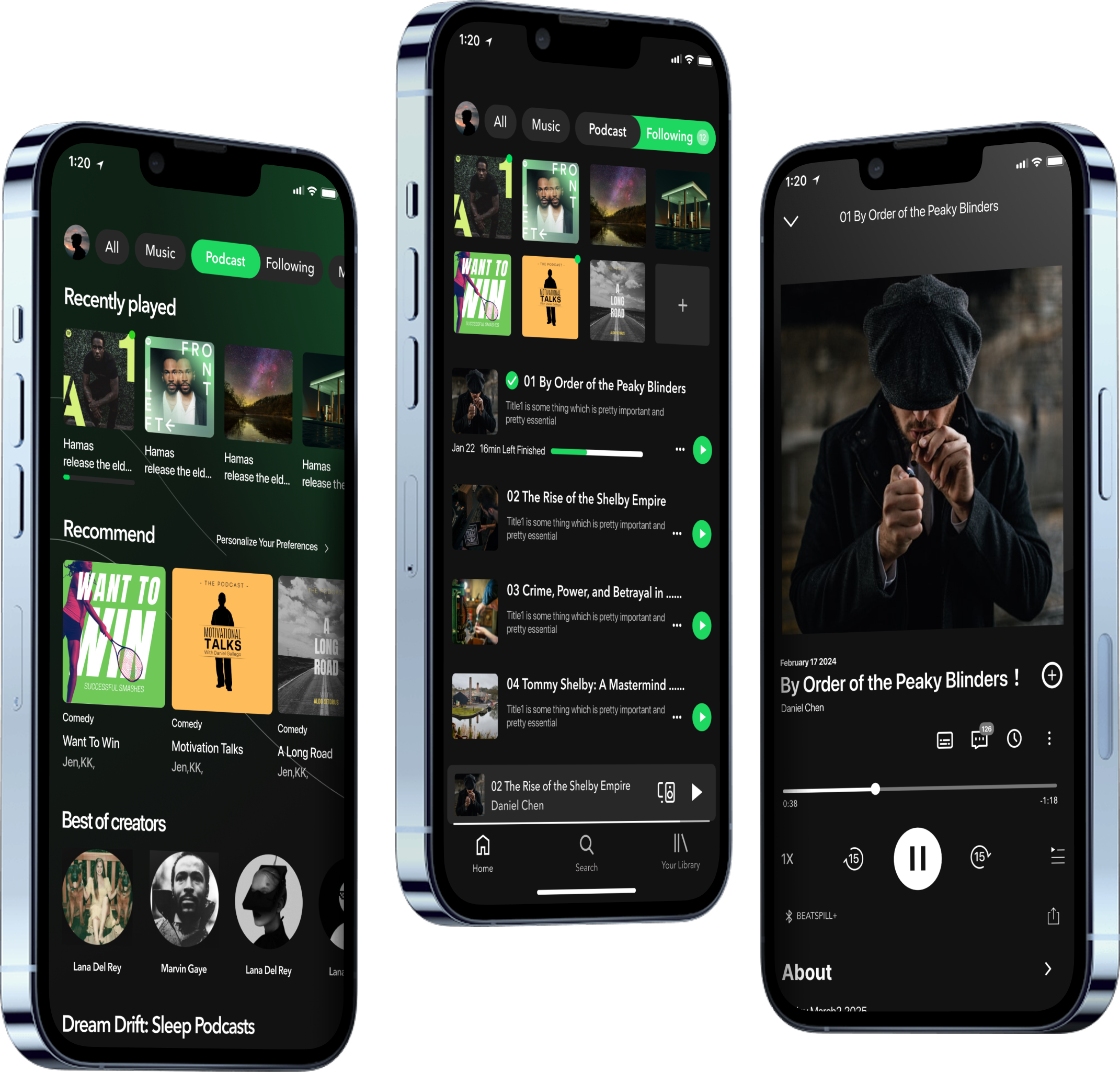
Enhance Spotify's podcast experience by leveraging usability studies to identify pain points and redesign core features, focusing on information architecture and social interactions to drive higher engagement and retention among U.S. podcast listeners.
Overview
Problem
Spotify faces profitability challenges that highlight the need for podcasts to become a core revenue stream. However, existing usability issues hinder user retention, limiting growth potential. To lead in the competitive podcasting space, Spotify must deliver a more intuitive, engaging, and socially connected experience.
Methodology
- Formative usability study
- Quantitative and qualitative methods
- Moderated usability testing
- Surveys
- Post-task questionnaires
- In-depth interviews
Process
Outcome
Timeline
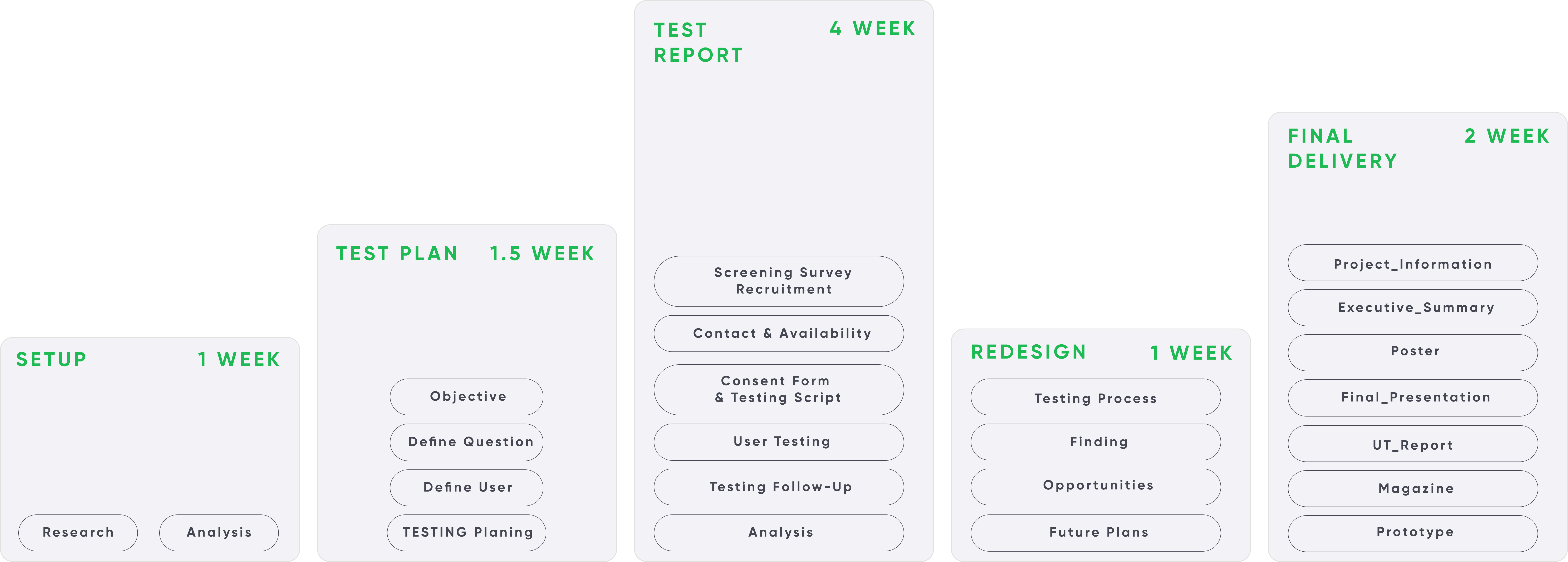
It was challenging to complete a full testing process and redesign within 10 weeks. As the project manager, I created timelines and regularly tracked tasks to ensure smooth project progress and timely completion.
Problem Discovery
How do we identify the problems?
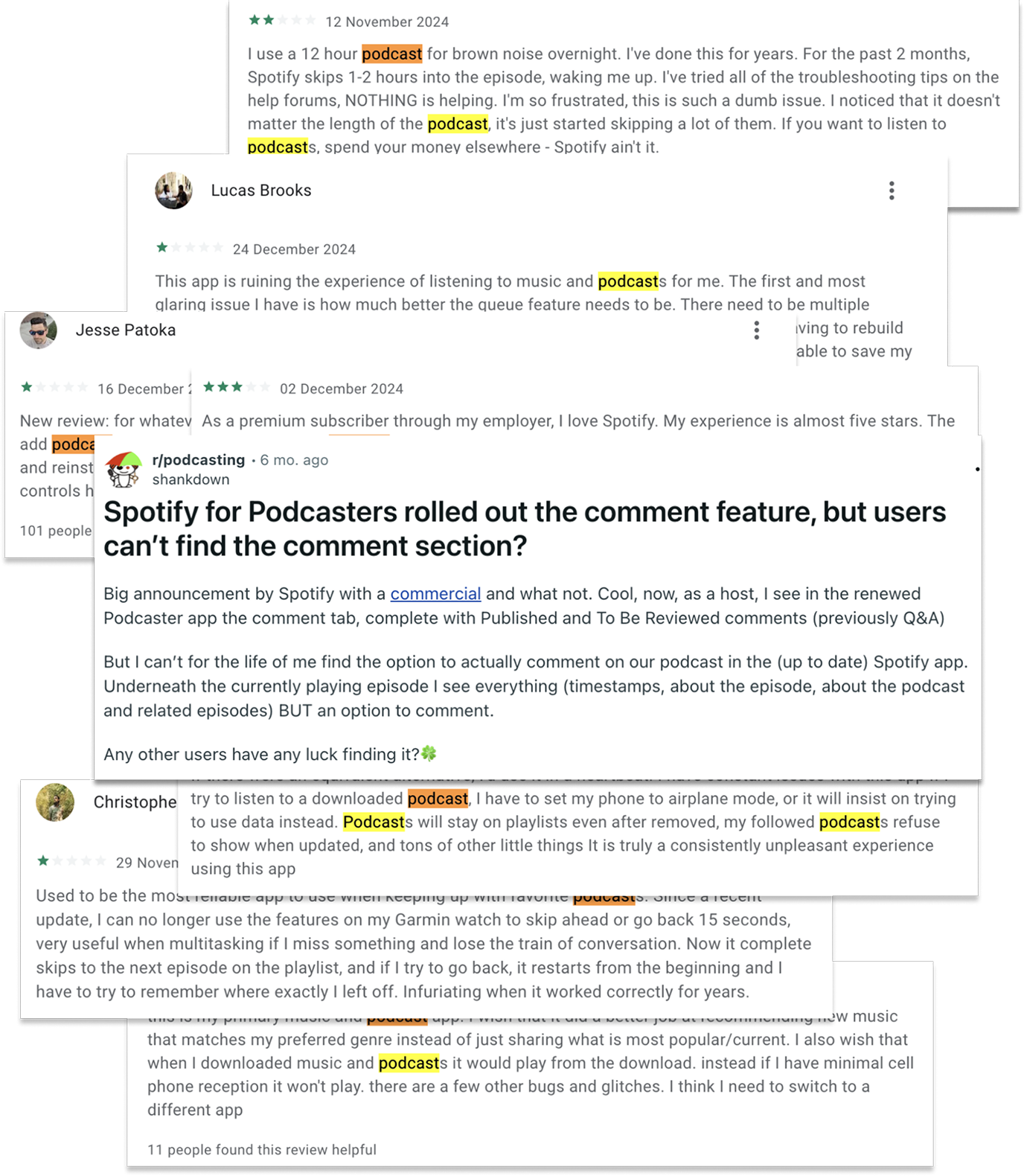
In the early stages of problem discovery, we conducted a preliminary analysis by examining user feedback on Reddit discussions and Google Play Store reviews. This research helped identify existing usability issues and led to the discovery of five key areas for improvement.
Testing
Understand Listener Behavior and Needs
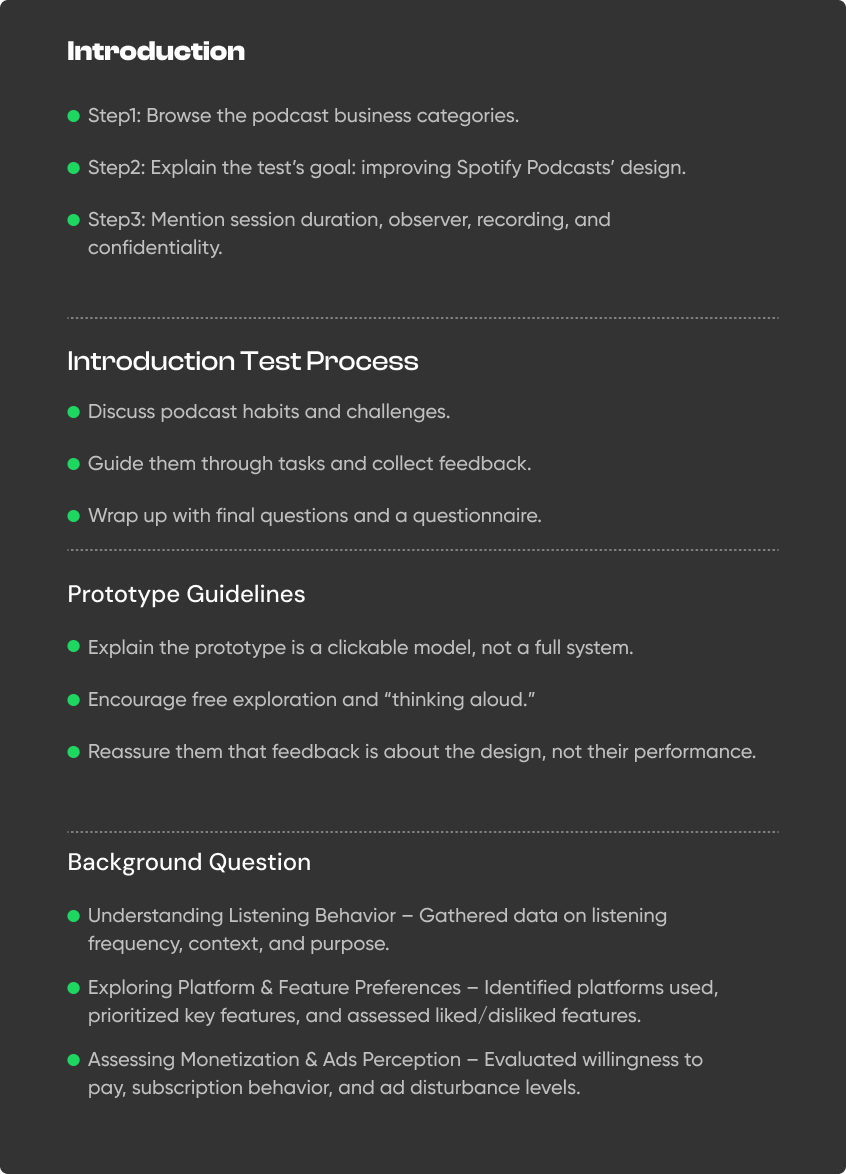
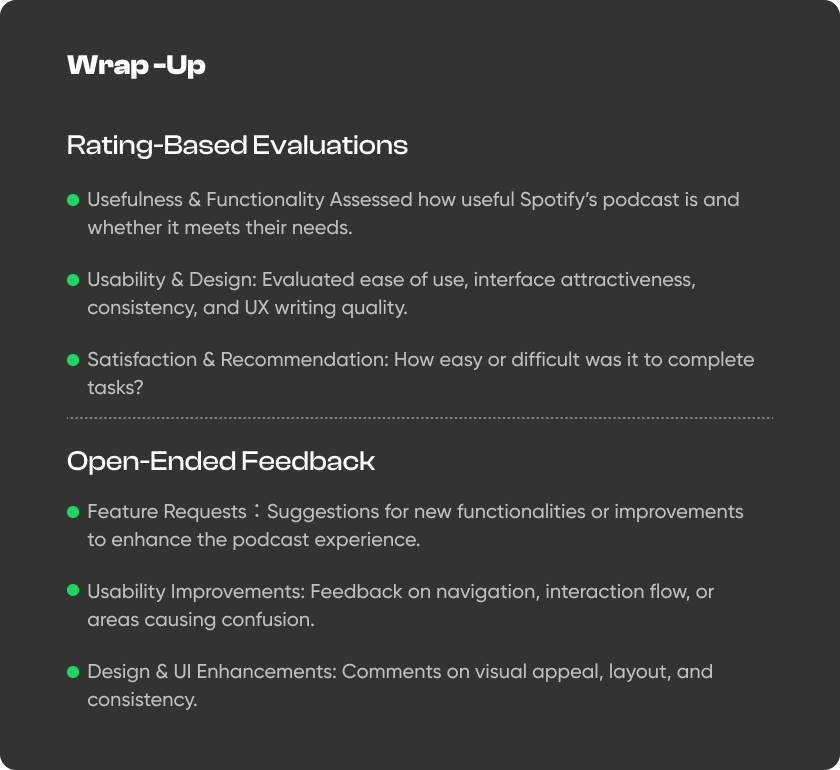
This study employs a formative usability evaluation using a combination of moderated task-based usability testing, structured interviews, and post-test surveys to assess user interactions with the Spotify Podcast. The objective is to measure task efficiency, user satisfaction, and feature usability through both qualitative and quantitative data collection methods, ensuring actionable insights for iterative product improvements.
Testing Plan
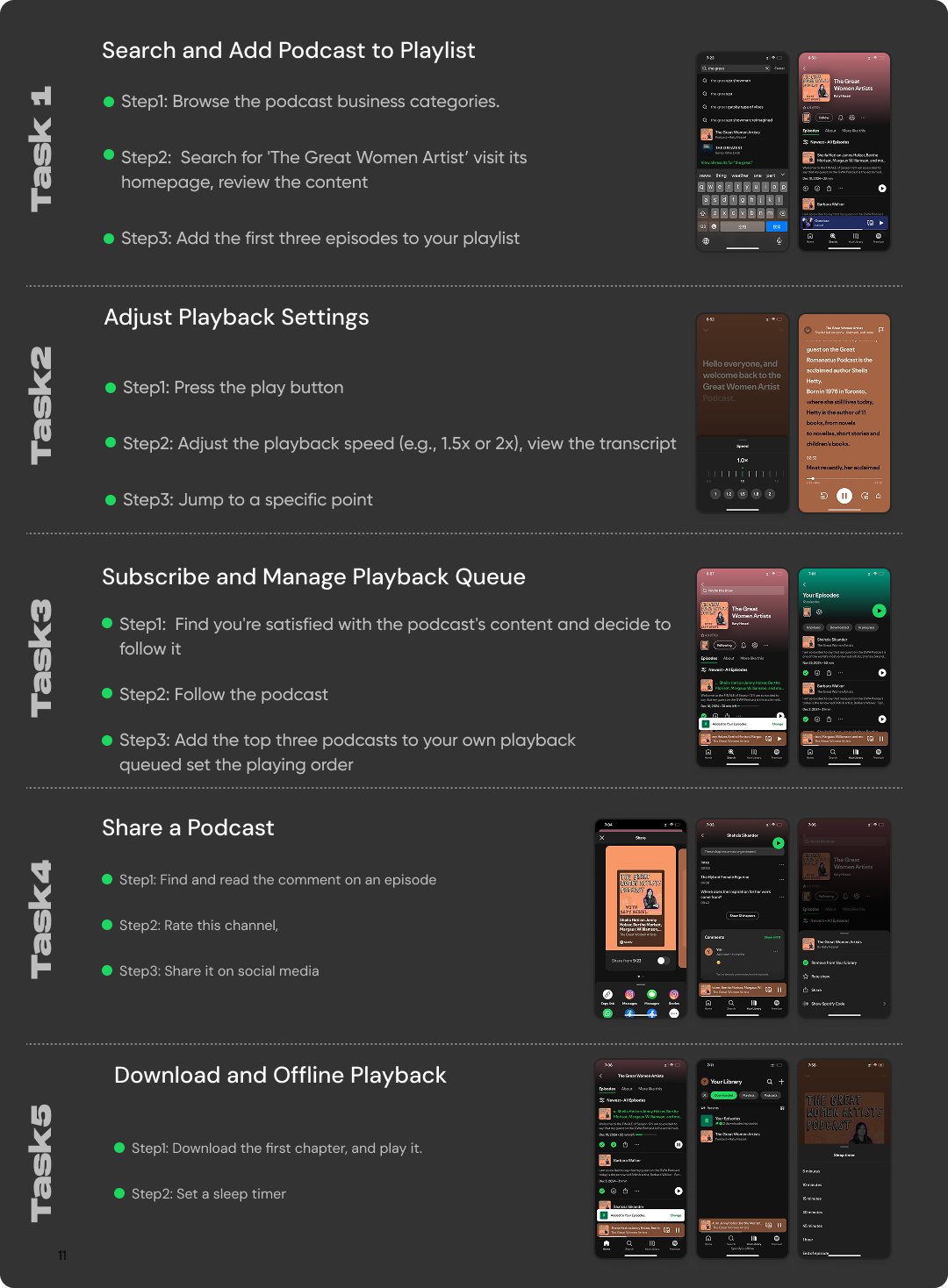
Based on insights gathered during the problem discovery phase, we designed five scenario-based tasks to evaluate the usability of Spotify's podcast features.
Recruitment Screener
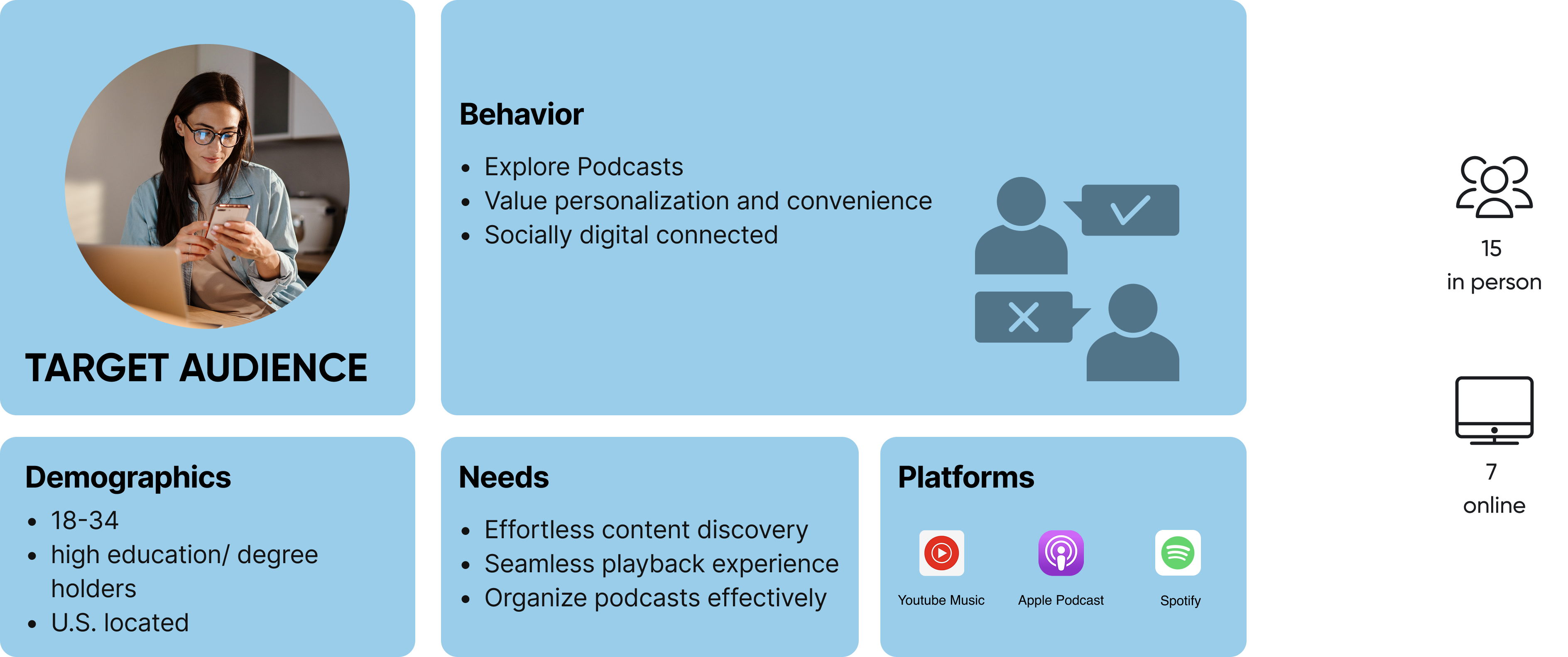
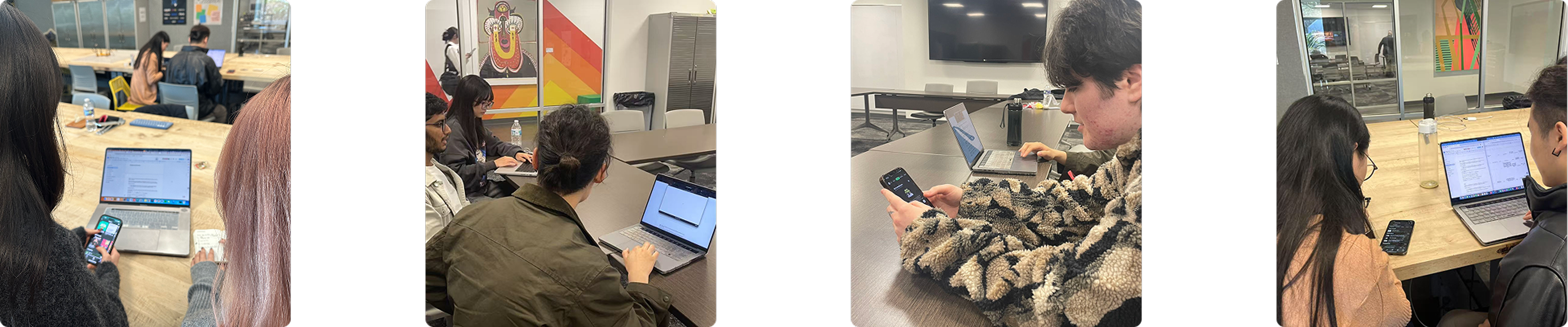
We recruited U.S.-based participants aged 18–34 with higher education backgrounds who regularly listen to podcasts on platforms like Spotify, Apple Podcasts, or YouTube Music. Priority was given to users who actively engage with features such as playlist management, offline downloads, and social interactions. We conducted usability testing with a total of 22 participants through a combination of in-person and remote sessions through usability testing website.
Conduct Testing
Quantitative Data
- 7-Point Likert Scale
- Task Completion Time
- Error Frequency Rate
Qualitative Data
- Think-Aloud Protocol Observations
- Feature Clarity Feedback
- Emotional Response Analysis
- Navigation & Usage Patterns
Data Analysis
What We Learned from Testing
Quantitative Data
Finding 01
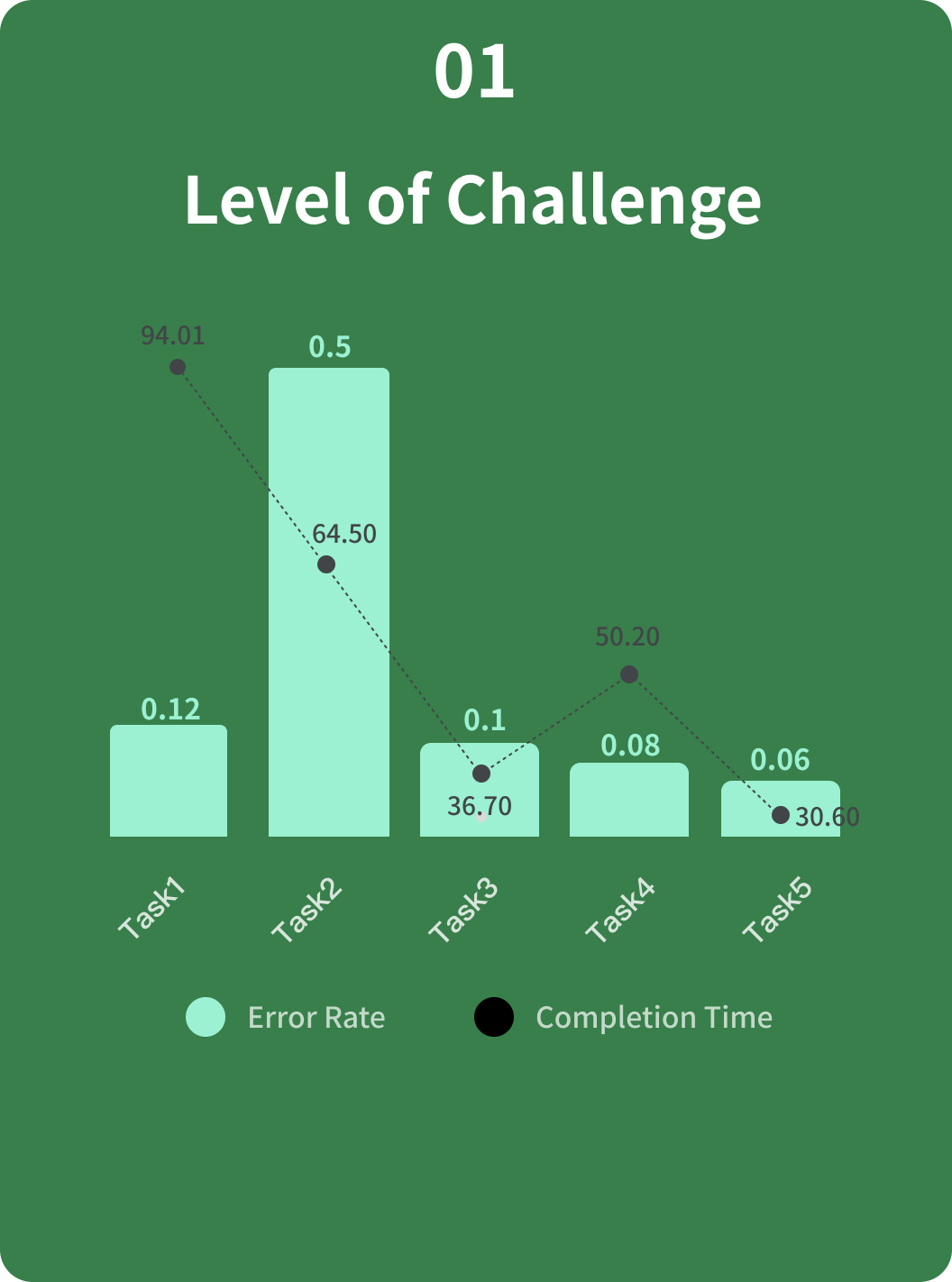
- Task 1 about Discovery & Adding Podcasts is time confusing
- Task 2 about Playback Controls has highest error rate
Finding 02
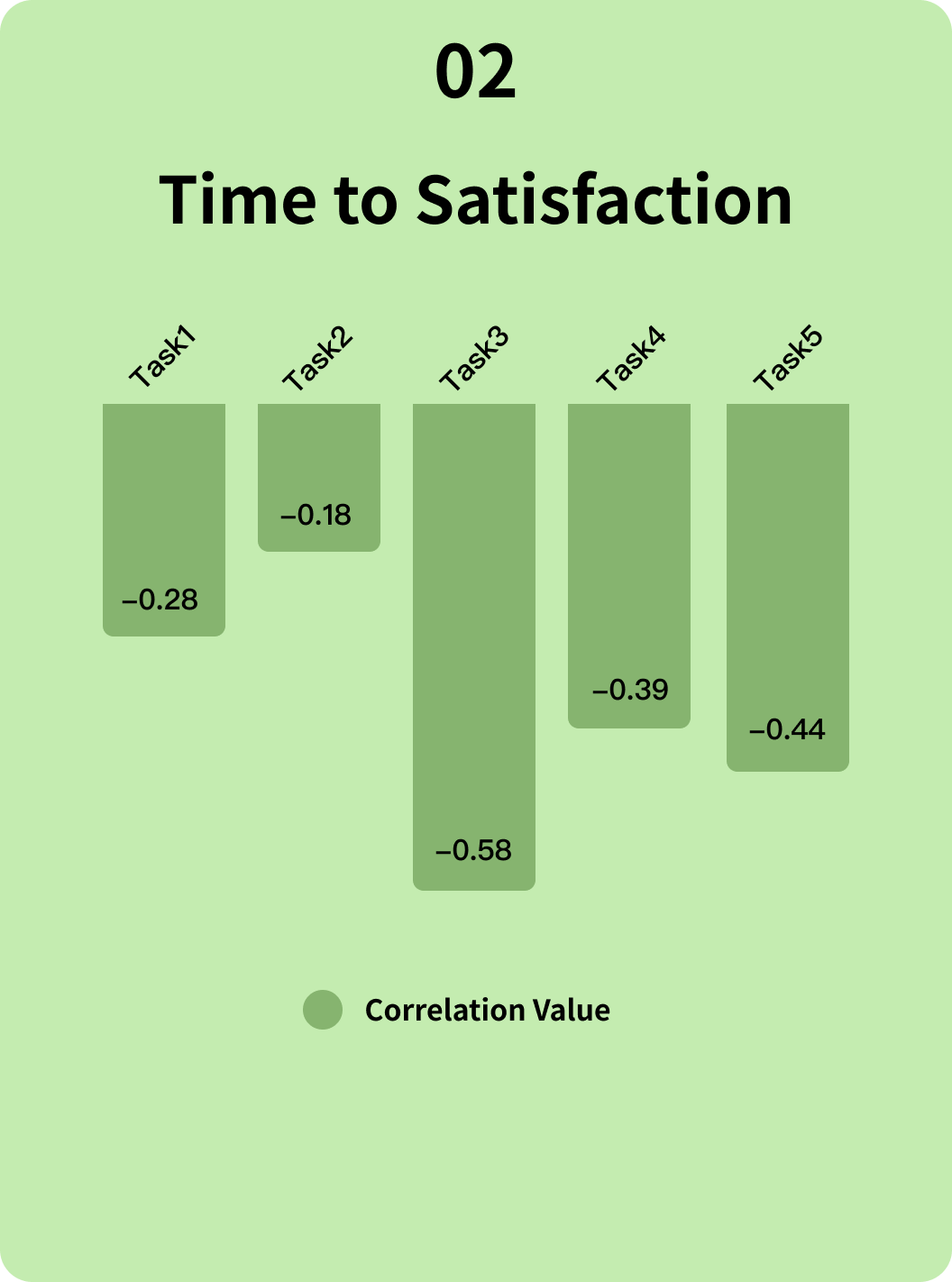
- The efficiency of Task 3 about Social Sharing & Engagement affects overall satisfaction
Qualitative Data
For the qualitative data, we used the affinity mapping method to synthesize 176 data points into four key problems and three user needs.
Problems
Needs
Final Design Directions
Based on our data analysis and prioritization, we identified three key directions for redesign.

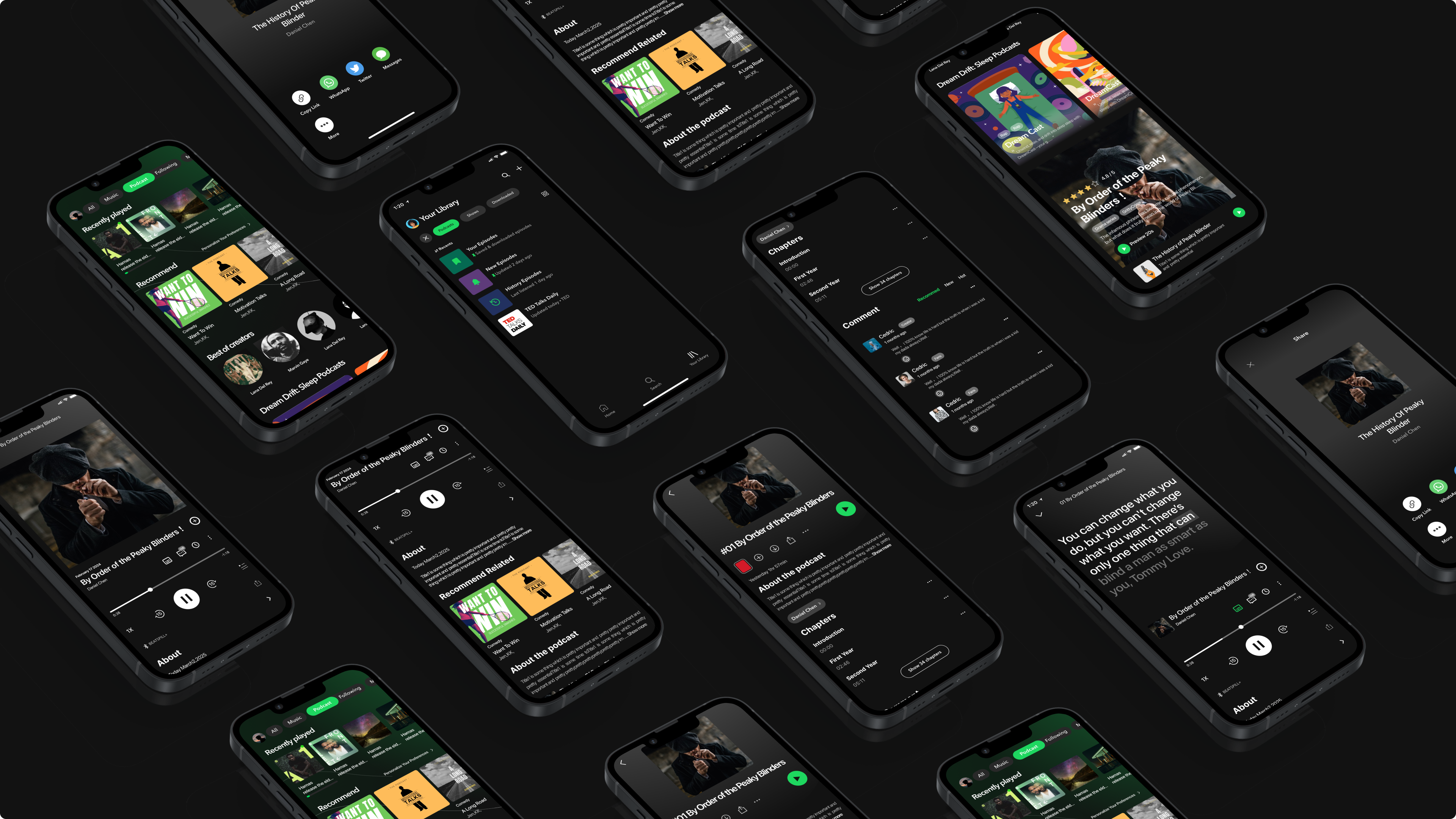
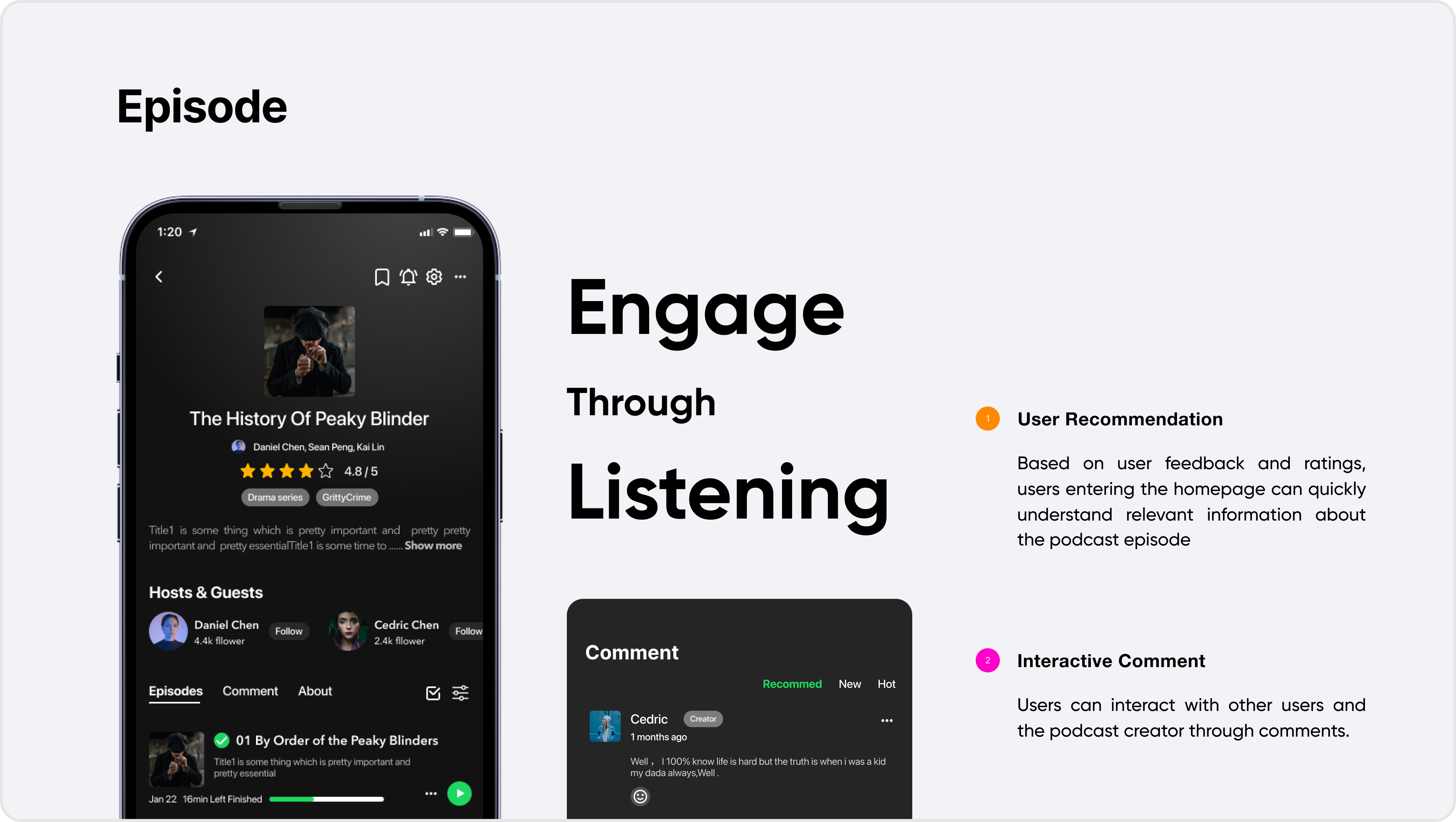
Final Design
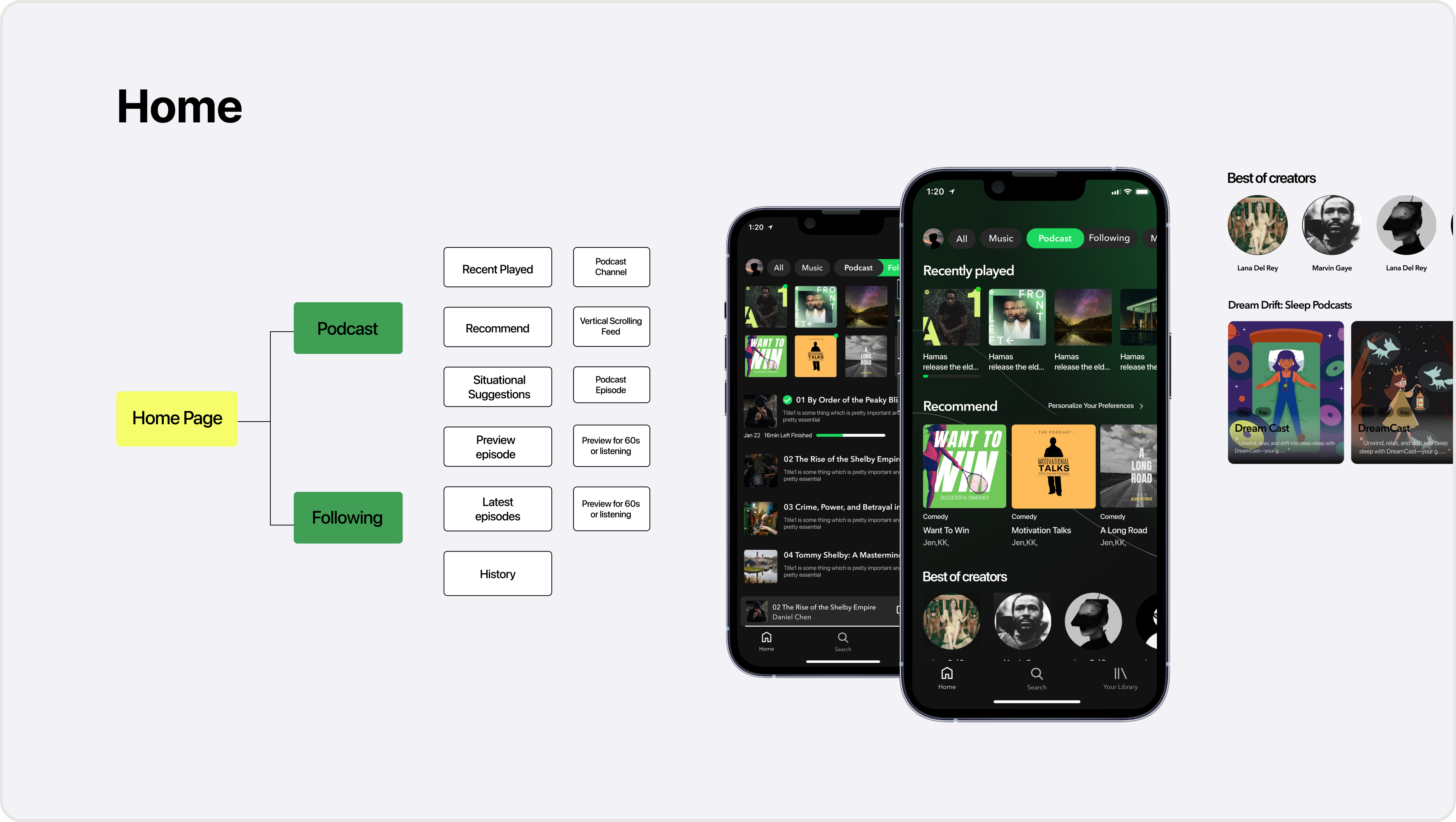
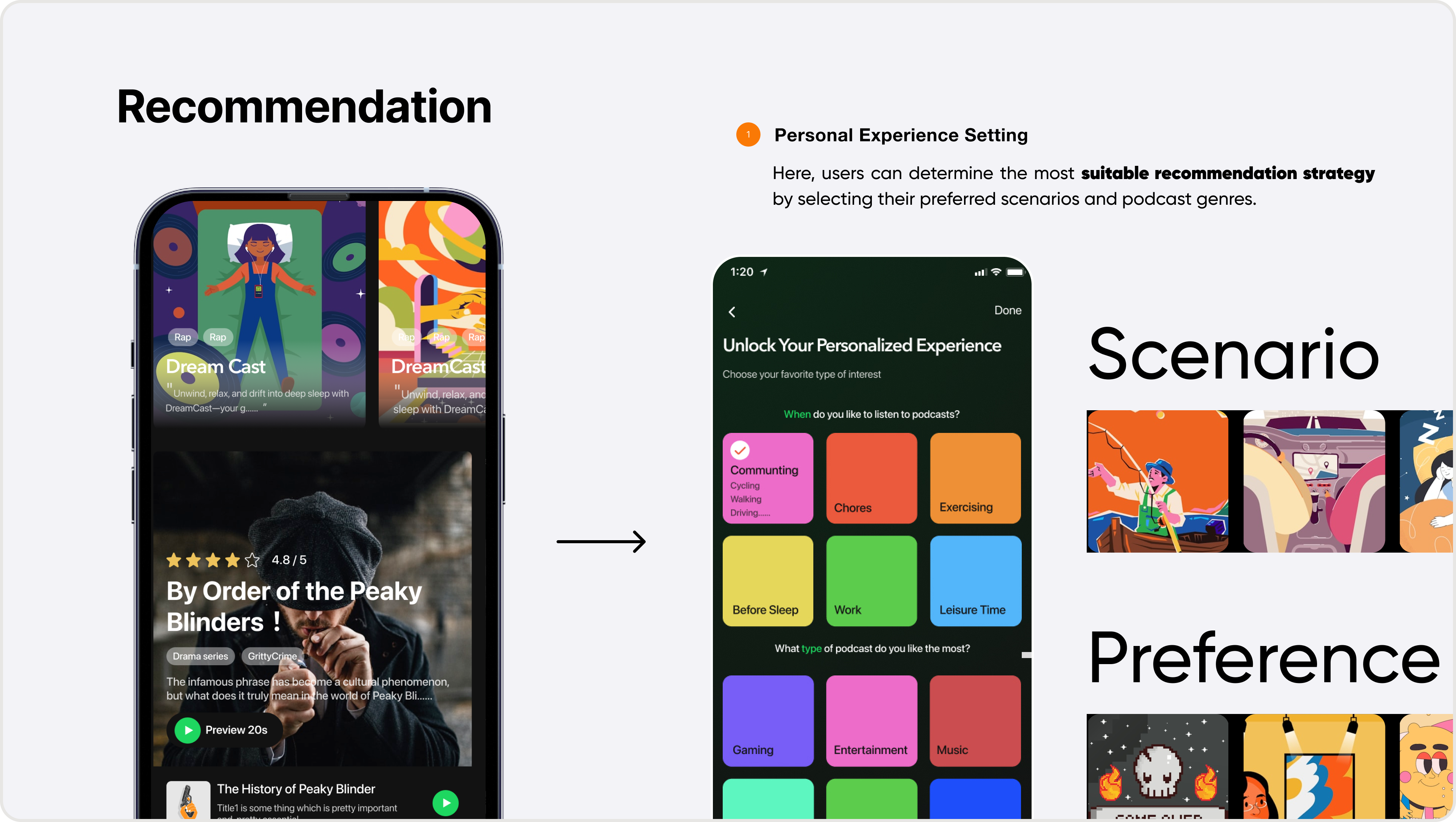
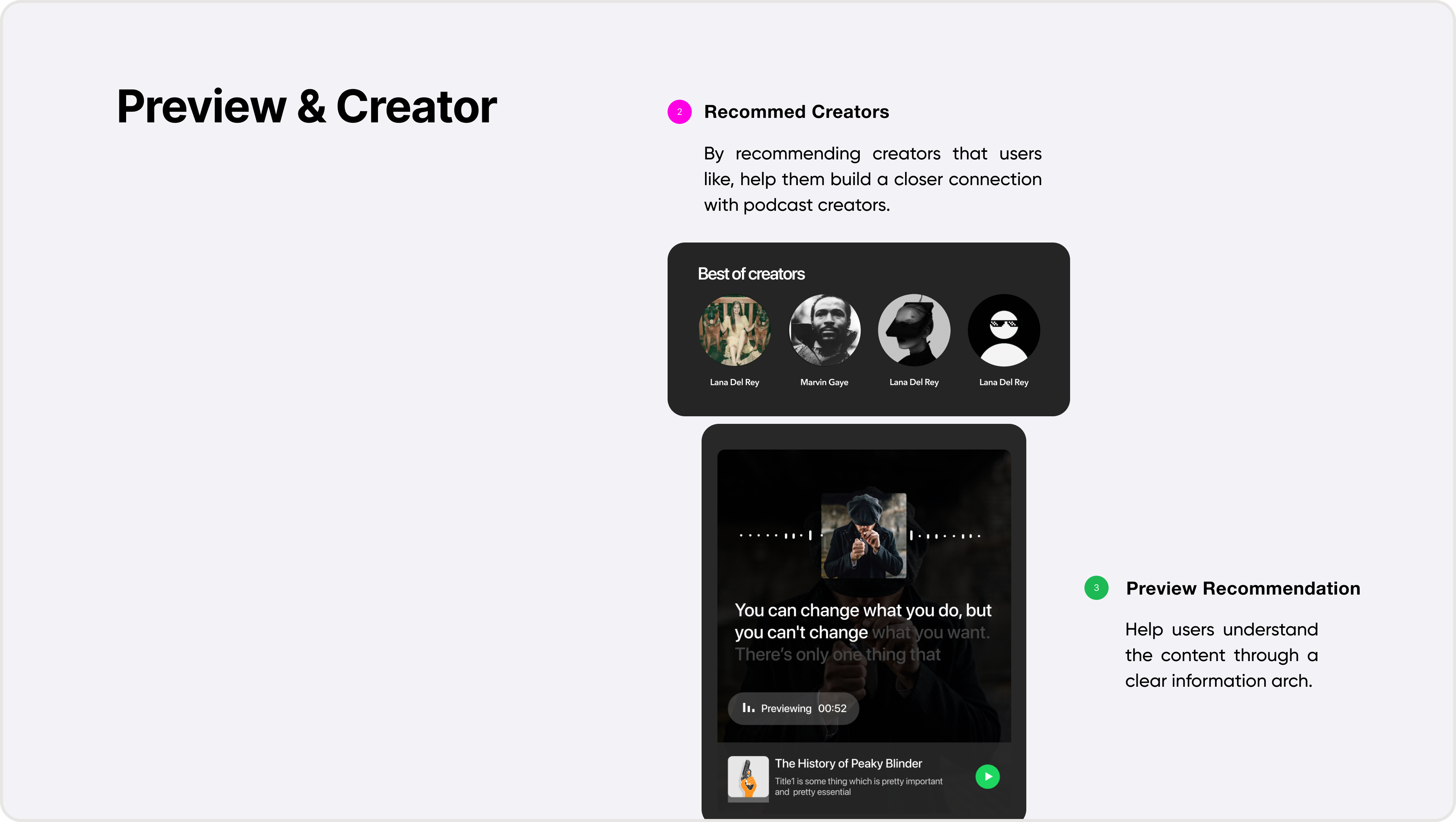
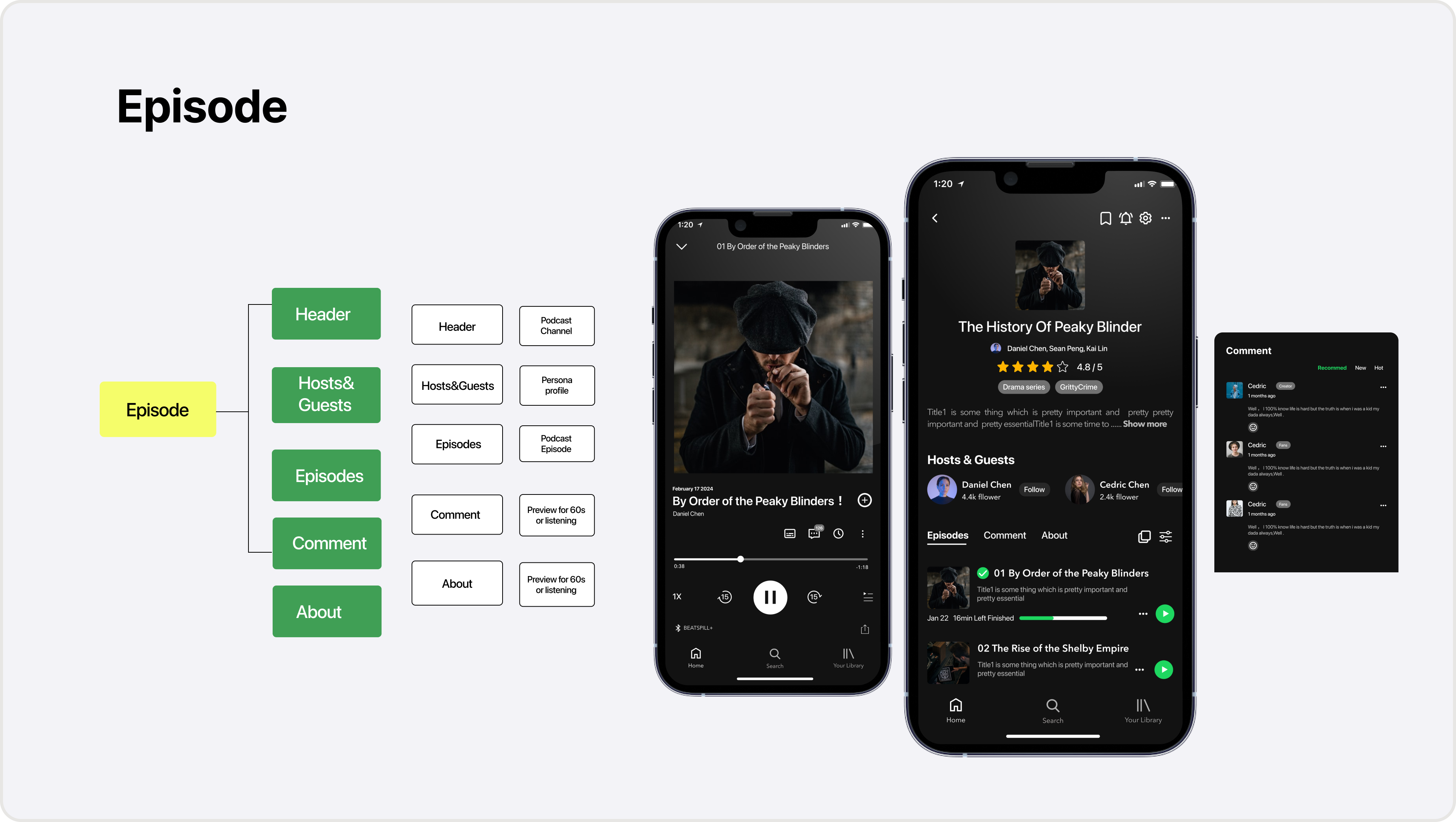
Beyond the final design...
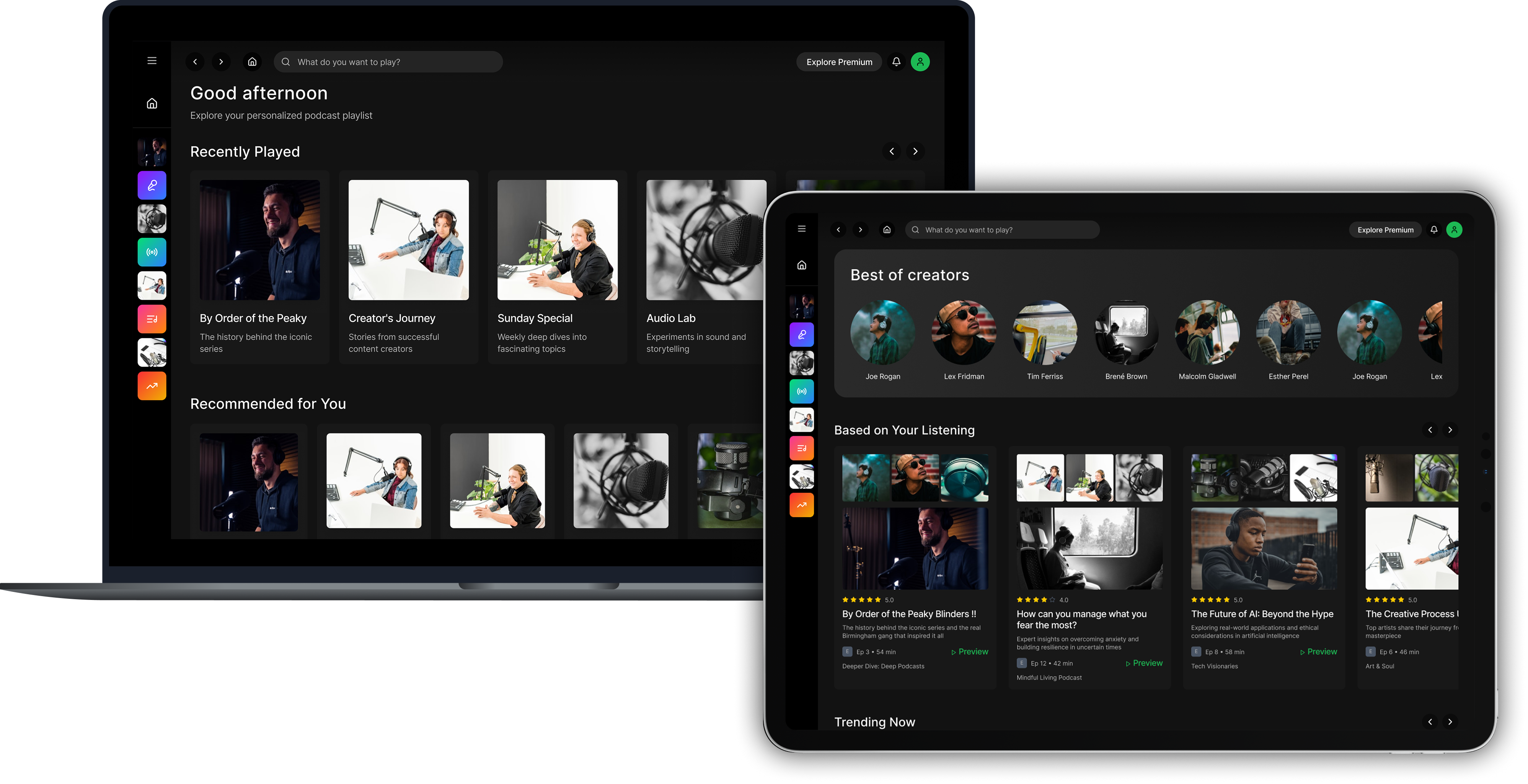
After the course project, I further explored a desktop version based on mobile design using the existing design system and AI-assisted tools such as Figma Make.